
Tag: Ad Tech Trends

  • What is Programmatic advertising?

    What is Programmatic advertising?

    Programmatic advertising is the automated process of buying and selling digital ad space in real-time, using software, algorithms, and data to target specific audiences more effectively. Instead of manually negotiating with publishers to place ads on websites, programmatic systems use real-time bidding (RTB) and other automated processes to purchase ad inventory across various digital channels (websites, apps, social media, etc.).

    Key Components:

    1. Demand-Side Platforms (DSPs): Allow advertisers to buy digital ad space automatically, targeting specific audiences based on various factors (demographics, interests, behaviour
      ).
    2. Supply-Side Platforms (SSPs): Help publishers manage, sell, and optimize their available ad space through an automated auction process.
    3. Real-Time Bidding (RTB): Ads are bought and sold in real-time, typically in milliseconds, based on the value of the impressions and targeting parameters set by the advertiser.
    4. Ad Exchanges: Digital marketplaces where buyers (advertisers) and sellers (publishers) meet to trade ad inventory programmatically.
    5. Data Management Platforms (DMPs): Collect and analyze audience data to help advertisers refine their targeting strategies for more personalized ad delivery.

    Benefits of Programmatic Advertising:

    Real-Time Optimization: Advertisers can adjust campaigns on the fly based on performance data.

    Efficiency and Speed: Automates the ad-buying process, making it faster and more efficient.

    Precise Targeting: Uses data and algorithms to deliver ads to specific audiences, reducing waste and increasing relevance.

    Scalability: Advertisers can reach large audiences across multiple platforms and devices.

    Real-Time Optimization:
     Advertisers can adjust campaigns on the fly based on performance data.

  • Getting your site monetized by Google AdSense

    Getting your site monetized by Google AdSense

    Here’s a general guide to help you through the process:

    1. Create Quality Content: Ensure your website has original, high-quality content that is useful and relevant to your audience. Aim for at least 20-30 posts or pages before applying.
    2. Comply with AdSense Policies: Familiarize yourself with Google AdSense policies and guidelines. Key areas include:
      • No adult content, violence, or illegal activities.
      • No misleading information or clickbait.
      • Ensure your content is family-friendly.
    3. Design a User-Friendly Website: Make sure your website has a clean and professional design. It should be easy to navigate, with clear menus and categories. Responsive design for mobile users is crucial.
    4. Add Essential Pages: Include important pages such as:
      • About Us
      • Contact Us
      • Privacy Policy
      • Terms and Conditions
    5. Ensure Your Site is Fully Functional: Check for broken links, slow loading times, and ensure that all features work properly.
    6. Set Up a Custom Domain: If possible, use a custom domain (e.g., www.yoursite.com) instead of a free subdomain.
    7. Check Traffic Sources: Ensure that your traffic comes from legitimate sources. Avoid using paid traffic services that violate AdSense policies.
    8. Apply for AdSense: Once your site is ready, go to the AdSense website and sign up. Fill out the application form and submit your site for review.
    9. Wait for Approval: Google will review your application, which can take anywhere from a few days to a couple of weeks. You’ll receive an email with the result of your application.
    10. Implement Ad Codes: If approved, you’ll receive ad code snippets to place on your website. Make sure to follow the instructions carefully to implement ads correctly.
    11. Monitor Performance: Once ads are live, monitor your performance and compliance with AdSense policies regularly to avoid issues.

    If your application is rejected, review the feedback provided, make the necessary changes, and consider reapplying after some time.

  • GAM Reporting Discrepancies Still Being Monitored: What Advertisers Need to Know

    GAM Reporting Discrepancies Still Being Monitored: What Advertisers Need to Know

    GAM Reporting Discrepancies Still Being Monitored: What Advertisers Need to Know

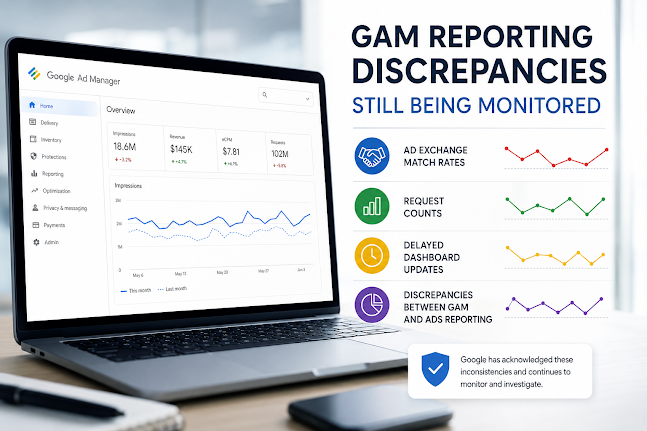
    Reporting inconsistencies in Google Ad Manager (GAM) continue to be actively monitored, following earlier acknowledgements of issues affecting key ad monetization and reporting signals across the platform.

    While the system remains operational, Google has previously confirmed that several reporting areas have shown irregularities that may impact how publishers and advertisers interpret performance data.

    Key Areas Affected

    The reported discrepancies have primarily been observed in the following areas:

    1. Ad Exchange match rates
    Some publishers have noticed fluctuations in match rates that do not fully align with expected traffic and demand behavior.

    2. Request counts
    Inconsistent request reporting has led to mismatches between GAM logs and downstream analytics tools.

    3. Delayed dashboard updates
    Certain reporting dashboards have experienced latency, causing delays in real-time or near-real-time performance visibility.

    4. GAM vs Ads reporting mismatches
    Differences have been observed between GAM reporting and other Google advertising surfaces, creating confusion when reconciling revenue and impression data.

    What This Means for Publishers

    For publishers relying on GAM for yield optimization and inventory analysis, these inconsistencies can create short-term uncertainty in:

    • Revenue pacing decisions
    • Bid strategy evaluation
    • Inventory forecasting
    • Campaign performance validation

    However, these issues are generally understood to be reporting-layer discrepancies rather than actual delivery or monetization failures.

    Current Status

    Google has acknowledged that these discrepancies are being monitored and investigated. No widespread service outage has been reported, and ad serving itself is not believed to be directly impacted.

    Instead, the focus remains on aligning reporting pipelines and ensuring consistency between GAM and related advertising reporting systems.

    Industry Context

    Reporting delays and mismatches are not uncommon in large-scale ad tech ecosystems, especially where multiple systems reconcile real-time bidding, impression logging, and attribution models.

    For ad operations teams, this reinforces the importance of:

    • Cross-validating GAM data with independent analytics tools
    • Monitoring trends rather than isolated daily fluctuations
    • Allowing for reporting latency in performance reviews

    Bottom Line

    While GAM reporting discrepancies remain under monitoring, the situation appears to be centered on data visibility rather than ad delivery. Publishers and advertisers should expect continued updates as Google works toward full reconciliation across reporting systems.