📺 The Programmatic CTV Explosion of 2026
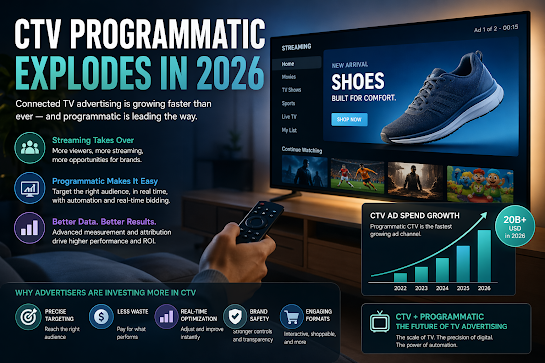
Connected TV (CTV) has shed its “emerging channel” label. In 2026, it is the undisputed heavyweight of digital advertising, fueled by the total convergence of streaming scale and AI-driven precision.
🚀 Why the Explosion is Peaks in 2026
The shift is no longer a “trend”—it’s a completed migration.
- The “Tipping Point” of Viewership
- Streaming Surpasses Linear: For the first time, streaming accounts for over 45% of all TV viewing, officially overtaking broadcast and cable combined.
- The Rise of FAST: Free Ad-Supported TV (Pluto, Tubi, Samsung TV Plus) has become the new “basic cable,” offering massive reach for programmatic buyers.
- Agentic AI Integration
- In 2026, we’ve moved past simple automation to Agentic AI. AI agents now manage real-time bidding, “attention-adjusted” pricing, and creative optimization without manual intervention.
- Retail Media & First-Party Data
- With the death of the cookie, CTV has become the hero of First-Party Data. Brands now link retail purchase data (e.g., Walmart, Amazon) directly to TV impressions to prove exactly who bought a product after seeing an ad.
📈 From Branding to Performance
Traditional TV was a “reach” play. 2026 CTV is a “results” play.
| Feature | Traditional TV (Linear) | Programmatic CTV (2026) |
| Targeting | Broad Demographics (Age/Gender) | Household-level (Interests/Buying Habits) |
| Buying | Manual IOs & Upfronts | Real-Time Bidding (RTB) |
| Optimization | Static (Fixed 30-sec spots) | Dynamic (AI-adjusted creative) |
| Measurement | GRPs & Estimates | Direct Attribution (Web visits/Sales) |
🎨 New “Active” Ad Formats
Viewers are no longer passive. The TV screen is now an interactive storefront:
- Pause Ads: High-impact, non-intrusive ads that appear when content is paused—now rated the most effective CTV format.
- Shoppable Overlays: AI-powered “click-to-cart” features that allow viewers to buy products via their remote or synced mobile device.
- Home Screen Mastery: The Smart TV OS (Roku, Fire TV) is the new “Prime Time,” with ads appearing on the home screen before a user even picks a show.
⚠️ The Remaining Hurdles
Despite the boom, the industry is still navigating:
- Measurement Fragmentation: While tracking is better, “standardization” across Netflix, Disney+, and YouTube remains a work in progress.
- The Ad Load Balance: As platforms push for revenue, “ad fatigue” is a growing risk. Quality and relevance are now more important than frequency.
- Identity Resolution: Moving away from IP addresses toward more secure, privacy-compliant “Alternative IDs.”
🔮 The Bottom Line
In 2026, TV is no longer just a branding channel—it is a performance engine. The brands winning today are those that treat CTV like a giant, high-definition version of search or social: data-driven, automated, and hyper-personalized. By combining the emotional power of the “Big Screen” with the surgical precision of AI, programmatic CTV has become the most essential line item in the modern marketing budget.