Tag: programmatic earnings

  • How Programmatic Really Decides Your Earnings

    How Programmatic Really Decides Your Earnings

    How Programmatic Really Decides Your Earnings

    Discover how programmatic ads actually determine your revenue. Learn key factors like viewability, demand, ad refresh, and optimization strategies.

    What Is Programmatic Advertising?

    Programmatic advertising is the automated buying and selling of ad inventory using real-time auctions. Instead of manual deals, advertisers bid on your ad space through platforms like Google Ad Manager.

    Each time a user loads your page, an auction happens instantly—and the highest qualified bid wins.


    The Key Factors That Decide Your Earnings

    1. User Quality (Geo + Intent)

    Not all traffic is equal.

    Advertisers pay more for users who are:

    • From high-value countries (US, UK, CA, AU)
    • Likely to convert (buyers vs browsers)
    • Returning visitors with behavioral data

    👉 A US visitor can be worth 5–10x more than traffic from lower CPM regions.


    2. Demand Density (Advertiser Competition)

    Your earnings increase when more advertisers are competing for your inventory.

    Factors that increase demand:

    • Niche content (finance, tech, health = high CPM)
    • Seasonal spikes (Q4 = highest demand)
    • Strong audience targeting

    Low competition = lower bids = lower revenue.


    3. Viewability (The Silent Revenue Killer)

    If ads aren’t seen, they aren’t valuable.

    Most advertisers optimize for:

    • 50% of the ad visible for at least 1 second (display)
    • Higher viewability = higher CPM bids

    👉 Ads below the fold or poorly placed will significantly reduce earnings.


    4. Ad Refresh Strategy

    Refreshing ads can boost revenue—but only if done correctly.

    Best practice:

    • Refresh ads every 30–45 seconds
    • Base timing on average session duration
    • Avoid aggressive refresh (can reduce bid quality)

    👉 Smart refresh = more impressions without hurting user experience.


    5. Floor Prices (Pricing Control)

    Floor prices set the minimum bid advertisers must meet.

    • Too high → fewer bids (unsold inventory)
    • Too low → undervalued impressions

    👉 The goal is dynamic floors that adjust based on demand.


    6. Latency (Speed Matters More Than You Think)

    Slow pages kill revenue.

    Why?

    • Auctions timeout
    • Bidders drop off
    • Fewer bids = lower CPM

    👉 A delay of even 1 second can reduce revenue significantly.


    7. Ad Layout & Density

    Where and how many ads you place matters.

    • Above-the-fold placements = highest value
    • Sticky ads perform well
    • Too many ads = lower user experience + lower bids

    👉 Balance is key: optimize for both UX and revenue.


    8. Auction Type (First-Price vs Second-Price)

    Most exchanges now use first-price auctions, meaning:

    • Advertisers pay what they bid

    This increases competition—but also makes bid strategies more complex.

    👉 Better setup = smarter bids = higher earnings.


    The Real Truth About Programmatic Revenue

    Programmatic doesn’t “decide” your earnings randomly.

    It’s driven by:

    • Your audience quality
    • Your technical setup
    • Your optimization strategy

    Two sites with the same traffic can earn very different revenue—because one understands these levers, and the other doesn’t.


    How to Maximize Your Earnings

    Here’s a quick action checklist:

    • Improve traffic quality (focus on high-value geos)
    • Optimize ad placements for viewability
    • Use smart ad refresh (30–45 seconds sweet spot)
    • Reduce page load time and latency
    • Test floor pricing strategies
    • Monitor bidder competition

  • Google’s Data Manager Map View: A New Era of First-Party Data Visibility in Ad Tech

    Google’s Data Manager Map View: A New Era of First-Party Data Visibility in Ad Tech

    📊 Google’s Data Manager Map View: A New Era of First-Party Data Visibility in Ad Tech

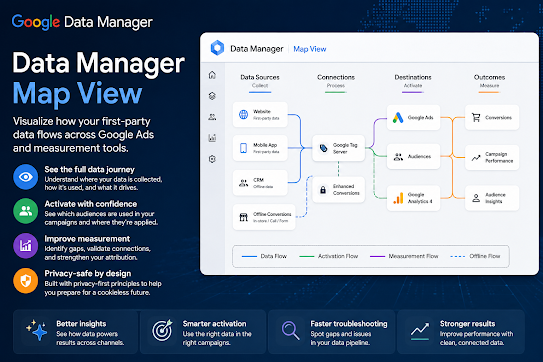
    Google is pushing deeper into privacy-safe advertising infrastructure with the introduction of Data Manager Map View, a new visualization layer designed to help advertisers and publishers understand how first-party data flows across campaigns, platforms, and measurement systems.

    While it sounds technical, its impact is actually very practical: it gives teams a clearer “map” of how user data connects to outcomes inside Google Ads and related ecosystems.


    🧠 What Data Manager Map View actually is

    Data Manager Map View is a visualization tool inside Google’s broader Data Manager framework that shows:

    • Where first-party data is collected (CRM, website, app, offline)
    • How it is activated in campaigns
    • Which conversions or audiences it impacts
    • How data moves across Google Ads and measurement tools

    Instead of manually tracing tags, audiences, and conversion paths, users can now see the entire data pipeline visually.

    Think of it as:

    A “Google Maps” for your advertising data flow.


    🔍 Why Google built it

    This launch is part of a bigger shift in ad tech:

    1. 📉 Cookie deprecation pressure

    With third-party cookies fading, advertisers need:

    • stronger first-party data usage
    • better visibility of data quality and flow

    2. 🤖 AI-driven campaign automation

    Google’s AI systems need clean, structured data. Map View helps advertisers understand:

    • where signals are strong
    • where tracking breaks down
    • where optimization inputs are missing

    3. 📊 Measurement complexity explosion

    Between:

    • GA4
    • Google Ads
    • Google Ad Manager
    • offline conversions
    • server-side tagging

    Most advertisers struggle to understand “what connects to what.” Map View reduces that confusion.


    🚀 Key features of Data Manager Map View

    🧩 1. End-to-end data flow visualization

    Shows how data moves from:

    • website/app → Google Ads → conversions → reporting

    🎯 2. First-party data activation tracking

    You can see:

    • which audiences are being used
    • where they’re applied (search, display, YouTube, etc.)

    ⚙️ 3. Integration transparency

    Helps identify:

    • broken tags
    • missing conversion events
    • underutilized data sources

    📈 4. Measurement readiness signals

    Highlights whether your setup is:

    • fully optimized
    • partially connected
    • or missing key data inputs

    💡 Why this matters for advertisers and publishers

    For advertisers:

    • Better optimization decisions
    • Less guesswork in attribution
    • Improved ROI tracking
    • Faster troubleshooting of conversion issues

    For publishers (GAM ecosystem users):

    • More stable demand signals
    • Better audience match quality
    • Improved programmatic performance understanding

    ⚠️ The catch (what to watch out for)

    Like most Google tools, effectiveness depends on setup quality:

    • Poor tagging = misleading visualization
    • Fragmented data sources = incomplete map
    • Server-side setup still required for full accuracy

    Also, it doesn’t replace analytics tools—it complements them.


    🔮 Big picture: where this is heading

    Data Manager Map View is part of a larger trend in ad tech:

    • 🧠 AI-managed advertising systems
    • 🔐 privacy-first measurement infrastructure
    • 📊 unified data activation pipelines
    • 📉 less reliance on third-party tracking

    In short, Google is moving toward a future where:

    advertisers don’t just run campaigns—they manage data ecosystems visually and automatically.